Clocking Out on Drug Efficacy: What Night Shifts and Sleep Loss Do to Your Prescriptions

Photo: Marjory Collins, Public domain, via Wikimedia Commons
The Pharmacist Never Mentioned This
You pick up your prescription, scan the label, and follow the instructions: take once daily, with food, at the same time each day. Straightforward enough—unless your "same time each day" is 3 a.m. before a 12-hour overnight shift, or your meals happen between midnight and 4 a.m., or your sleep comes in fragmented two-hour windows between school drop-off and your next rotation.
For the estimated 15 million Americans who work nights, rotating shifts, or extended irregular hours—nurses, emergency responders, long-haul truck drivers, factory workers, airline crew—standard medication instructions were not written with them in mind. The clinical research that establishes dosing guidelines, timing recommendations, and efficacy data is overwhelmingly conducted on subjects with conventional sleep-wake schedules. The result is a significant and underappreciated gap between how a drug is supposed to work and how it actually performs in the body of a sleep-deprived night-shift worker.
This is not a minor inconvenience. It is a public health concern affecting millions of patients who deserve medication guidance tailored to their actual lives.
Your Body Runs on a Clock—Even When You Don't Want It To
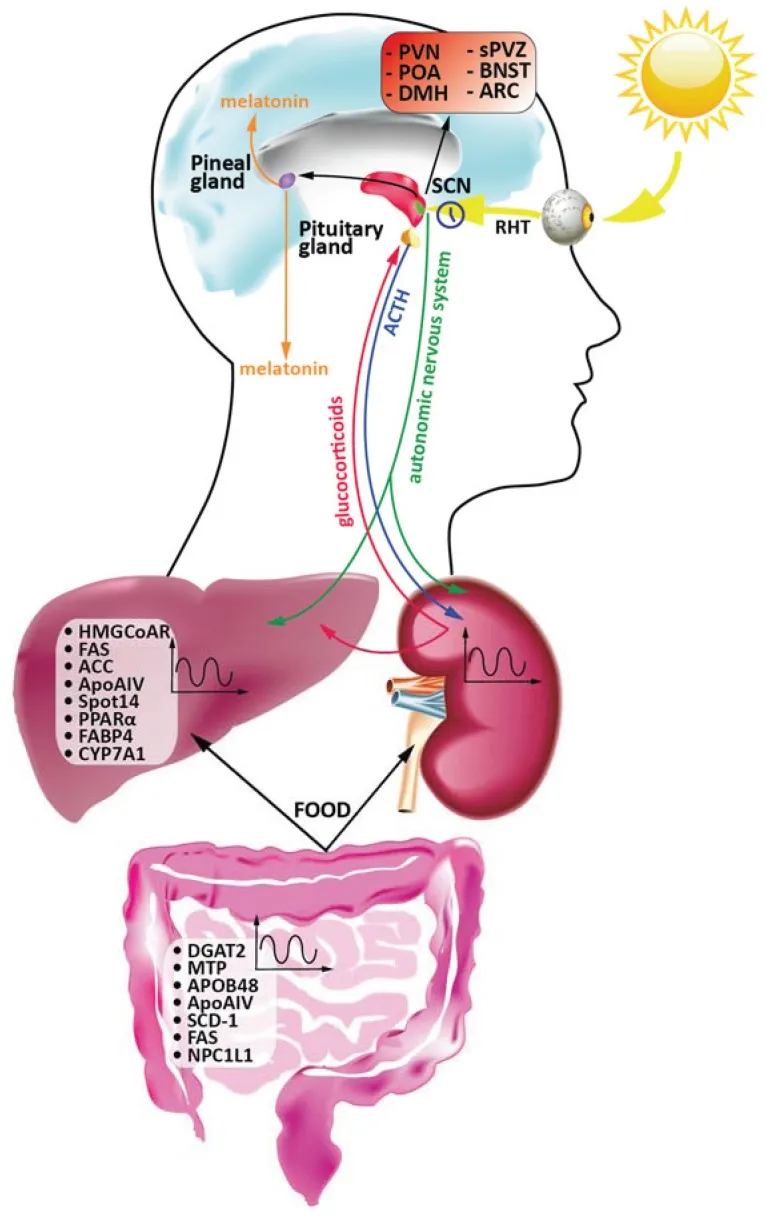
Every cell in the human body contains a molecular timekeeping mechanism. These internal clocks, collectively called the circadian system, regulate an extraordinary range of physiological functions: hormone secretion, immune activity, body temperature, gastrointestinal motility, liver enzyme production, and kidney filtration rates—all of which fluctuate predictably across a 24-hour cycle.
What does this have to do with your prescription? Quite a lot, as it turns out.
Drug absorption depends partly on gastrointestinal motility and blood flow to the gut—both of which are circadian-regulated. Drug metabolism is carried out primarily by liver enzymes, many of which (including the critically important cytochrome P450 family) exhibit peak activity at specific times of day. Drug elimination through the kidneys follows glomerular filtration rates that also cycle across the day. Even the sensitivity of target receptors—the biological locks that medications are designed to open—varies by time of day.
For a person on a conventional schedule, these rhythms are synchronized with the external environment: sunlight, meal timing, and social activity all reinforce the internal clock. For a night-shift worker, these same rhythms are chronically misaligned. The body's clock continues running on its ancestral program while the person's external schedule runs in the opposite direction. This state—called circadian misalignment—is not merely uncomfortable. It is physiologically disruptive in ways that directly affect pharmacology.
Which Medications Are Most Vulnerable
Not every drug class is equally affected by circadian disruption, but several categories warrant particular attention among shift workers and their prescribers.
Cardiovascular Medications
Blood pressure follows a well-established circadian pattern in most individuals, typically peaking in the morning hours and dipping during overnight sleep—a phenomenon called the nocturnal dip. Antihypertensive medications are often timed to counteract this morning surge. In shift workers, this pattern is disrupted or inverted, meaning a medication taken at the "right" clock time may correspond to the wrong phase of the patient's actual blood pressure cycle.
Research published in cardiology literature has documented that shift workers on antihypertensive therapy show less consistent blood pressure control than their day-working counterparts, even when adherence is equivalent. The drug is present; the timing simply does not match the body's need.
Psychiatric and Sleep Medications
Shift workers experience disproportionately high rates of anxiety, depression, and sleep disorders—conditions that frequently require pharmacological management. Yet the very medications prescribed for these conditions are among those most sensitive to circadian timing.
Benzodiazepines and non-benzodiazepine sleep aids (the so-called "Z-drugs" such as zolpidem) have half-lives and sedative effects that can interact unpredictably with irregular sleep timing. A worker attempting to sleep at 9 a.m. after an overnight shift may find that the medication either fails to induce sleep effectively or produces excessive grogginess during the subsequent "waking" period—which might begin just four to five hours later.
Antidepressants present a related challenge. Many SSRIs and SNRIs are recommended for morning dosing to minimize sleep interference. For a night-shift worker whose morning is 2 p.m., the downstream effects on sleep architecture may differ meaningfully from what clinical trials predict.
Diabetes Medications
Insulin sensitivity and glucose metabolism are profoundly circadian-regulated. The body is generally more insulin-sensitive in the morning and less so at night—a pattern that informs the dosing strategies for both insulin and oral hypoglycemic agents.
Shift workers with type 2 diabetes face a particularly difficult management challenge: their eating schedules are irregular, their sleep-wake cycles are misaligned, and the metabolic rhythms that their medications were calibrated against are effectively scrambled. Studies have consistently found that shift work is independently associated with poorer glycemic control, and medication timing confusion is a contributing factor.
Pain Medications
Pain perception itself is circadian-modulated—most people experience heightened pain sensitivity in the late afternoon and evening. Analgesics, including both over-the-counter options and prescription opioids, may therefore exhibit variable efficacy depending on when in the circadian cycle they are administered. For shift workers managing chronic pain conditions, this variability adds another layer of complexity to an already challenging regimen.
The Sleep Deprivation Multiplier
Circadian misalignment and sleep deprivation are related but distinct problems, and shift workers frequently experience both simultaneously. Sleep deprivation independently impairs medication effectiveness through several pathways.
Sleep loss elevates systemic inflammation and cortisol levels, which can blunt the efficacy of anti-inflammatory medications and destabilize mood-stabilizing drug regimens. It impairs cognitive function, increasing the likelihood of dosing errors—missed doses, double doses, or incorrect timing. It also affects gastrointestinal function, potentially altering drug absorption rates in ways that are difficult to predict.
For healthcare workers specifically—a population that includes some of the most medication-adherent patients in the country—the irony is stark: the professional demands that make their schedules most disruptive are the same demands that place them at elevated risk for conditions requiring pharmacological management.
Practical Strategies for Non-Traditional Schedules
The good news is that circadian pharmacology is an active and growing field, and evidence-based strategies are emerging for patients managing medications on irregular schedules.
Anchor medication timing to your personal sleep-wake cycle, not the clock. For many medications, consistency relative to your own wake time matters more than the absolute hour. Discuss this explicitly with your prescriber.
Communicate your schedule to your entire care team. Shift work status should be documented in your medical record. It is clinically relevant information that affects prescribing decisions across virtually every specialty.
Ask specifically about chronopharmacology. When starting a new prescription, ask your pharmacist or physician whether the medication has known time-of-day sensitivities and how those recommendations should be adapted for a non-standard schedule.
Prioritize sleep consolidation whenever possible. Even if your sleep timing is non-traditional, sleeping in a single consolidated block rather than fragmented naps helps preserve some degree of circadian organization—and improves medication adherence and cognitive function.
Monitor outcomes more closely. Shift workers should be proactive about follow-up appointments and symptom tracking. If a medication that worked well during a day-shift rotation seems less effective after switching to nights, that observation is clinically meaningful and worth reporting.
A Gap the Healthcare System Must Address
The pharmaceutical industry and clinical research community have begun to acknowledge what shift workers have experienced firsthand for decades: the standard medication model assumes a lifestyle that roughly one in five American workers does not have. Closing this gap requires updated prescribing guidance, more inclusive clinical trial populations, and providers who ask about work schedules as routinely as they ask about allergies.
Until that gap is fully closed, the responsibility falls partly on patients themselves—to ask informed questions, report unexpected medication responses, and advocate for prescribing guidance that reflects their actual daily reality.