The Clock Inside Your Cells: How Circadian Biology Determines When Your Medication Works Best
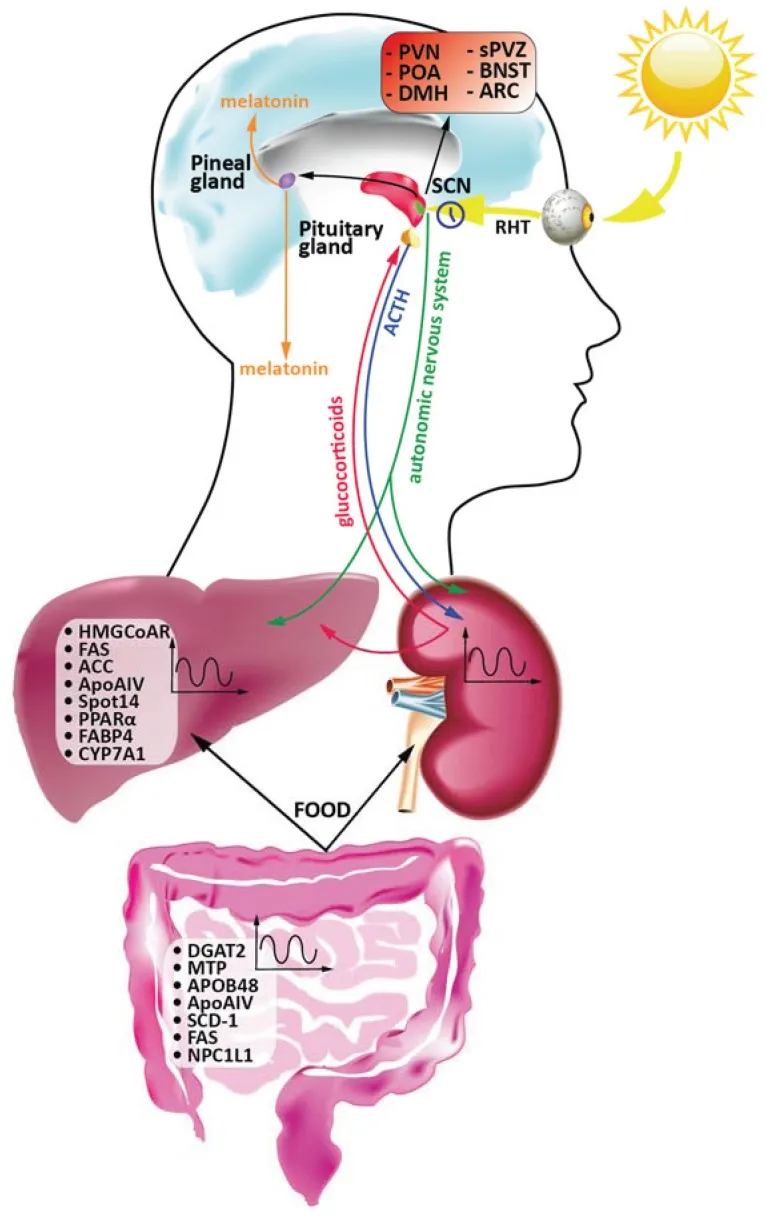
Photo: Davide Gnocchi, Matteo Pedrelli, Eva Hurt-Camejo, and Paolo Parini, CC BY 4.0, via Wikimedia Commons
Most patients read a prescription label and focus on the dose, the refill date, and perhaps the list of side effects. Rarely does anyone pause to consider whether 8:00 in the morning is meaningfully different from 8:00 in the evening when swallowing that pill. Yet for a growing number of medications, that distinction is not trivial—it may be the single most important variable in whether the drug performs as intended.
The field studying this phenomenon is called chronopharmacology, and it sits at the intersection of two well-established sciences: pharmacology and circadian biology. Its central premise is straightforward but often overlooked in routine clinical practice: the human body does not operate at a constant biological baseline throughout the day. Organ function, enzyme activity, hormone secretion, and cellular receptor sensitivity all fluctuate in predictable patterns tied to a roughly 24-hour internal clock. Those fluctuations, in turn, affect nearly every stage of drug activity—from the moment a tablet dissolves in the stomach to the moment its metabolites are cleared from the bloodstream.
What Circadian Rhythms Actually Do Inside the Body
The suprachiasmatic nucleus, a small cluster of neurons in the hypothalamus, serves as the body's master pacemaker. It synchronizes peripheral clocks found in virtually every tissue—the liver, kidneys, intestines, and cardiovascular system among them. Each of these peripheral clocks governs the expression of genes that code for drug-metabolizing enzymes, transport proteins, and receptor populations.
Consider the liver, which is responsible for metabolizing the majority of pharmaceutical compounds. Cytochrome P450 enzymes—the workhorses of hepatic drug metabolism—do not operate at uniform capacity around the clock. Studies have demonstrated that certain P450 isoforms are significantly more active during waking hours than during sleep. A drug taken when its primary metabolic pathway is running at peak capacity will be processed more rapidly, potentially shortening its effective window. The same drug taken during a trough period may linger longer in circulation, intensifying both its therapeutic effects and its side effect profile.
Gastrointestinal motility, gastric acid secretion, and intestinal blood flow also follow circadian patterns, meaning that oral drug absorption itself is time-dependent. A medication that relies on rapid dissolution in an acidic environment may behave quite differently when taken before the morning surge in gastric acid compared with late evening, when acid output is relatively suppressed.
High-Stakes Examples: Medications Where Timing Is Evidence-Based
Statins and Cholesterol Management
The liver synthesizes the majority of its cholesterol during the overnight hours, which is why most healthcare providers historically recommended taking statins at bedtime. For shorter-acting agents such as simvastatin and lovastatin, evening dosing directly targets the period of peak cholesterol production, delivering the drug when it can have the greatest inhibitory effect on HMG-CoA reductase. Longer-acting statins like atorvastatin and rosuvastatin are considered more timing-flexible, though some research continues to support an evening preference even for these agents.
Blood Pressure Medications
Cardiovascular disease risk is not evenly distributed across the day. Blood pressure follows a well-documented pattern, rising sharply in the early morning hours—a phenomenon tied to the cortisol awakening response and increased sympathetic nervous system activity. This morning surge is associated with elevated risk of heart attack and stroke. Research, including the landmark HYGIA Chronotherapy Trial conducted in Spain, found that patients who took their antihypertensive medications at bedtime rather than in the morning achieved better nighttime blood pressure control and experienced significantly fewer major cardiovascular events. While some subsequent studies have raised methodological questions, the underlying principle—that timing antihypertensives to blunt the morning surge may offer protective benefits—remains an active and clinically relevant area of investigation.
Immunosuppressants
For transplant recipients and patients with autoimmune conditions, consistent dosing intervals are essential to maintaining stable drug concentrations and preventing rejection or disease flares. But beyond consistency, the immune system's own circadian rhythm—characterized by heightened inflammatory activity in the early morning—has led researchers to explore whether targeted immunosuppressive dosing schedules might improve outcomes. Modified-release formulations designed to deliver peak drug concentrations during the early-morning immune activation window are already in clinical use for conditions such as rheumatoid arthritis.
Corticosteroids
Morning dosing of corticosteroids is a longstanding clinical standard, deliberately designed to mimic the body's natural cortisol peak, which occurs shortly after waking. This approach minimizes disruption to the hypothalamic-pituitary-adrenal axis and reduces the risk of adrenal suppression. Deviating from this timing without medical guidance can destabilize hormonal feedback loops that took months to establish.
Chronotherapy Beyond the Obvious
The timing question extends well beyond the drug classes listed above. Chemotherapy agents, asthma medications, antihistamines, and even certain antibiotics have demonstrated circadian-dependent activity in research settings. Chemotherapy protocols that align drug delivery with tumor cell division cycles—which themselves follow circadian patterns—have shown promise in reducing toxicity while preserving efficacy. Inhaled corticosteroids for asthma may perform best when administered in the early evening, given that airway inflammation tends to peak in the overnight hours.
Practical Guidance for Patients
None of this is a call for patients to independently adjust their medication schedules. Self-directed timing changes carry real risks, particularly for drugs with narrow therapeutic windows or those subject to strict dosing intervals. What this science does call for is a more detailed conversation between patients and their healthcare providers—one that goes beyond "take once daily" and considers the individual's sleep-wake cycle, work schedule, and specific disease physiology.
Several practical steps can help patients engage productively with this topic:
- Ask specifically about timing during medication counseling appointments. Questions such as "Is there an optimal time of day for this medication based on how my body processes it?" open the door to evidence-based guidance.
- Be honest about your schedule. A bedtime dosing recommendation is only useful if it aligns with a consistent sleep schedule. Shift workers, for example, may require individualized timing strategies that account for a non-standard circadian phase.
- Use reminder tools that reinforce consistency. For medications where stable blood levels are paramount, the most important timing principle is regularity—taking the drug at the same time every day, regardless of whether that time is perfectly optimized.
- Review timing during medication reconciliation. When a new drug is added to an existing regimen, ask whether its timing interacts with or complements the schedule of drugs already being taken.
The Emerging Frontier
Precision medicine has largely focused on genetic variation as the driver of individualized therapy. Chronopharmacology adds another dimension—temporal variation—to that framework. As wearable technology advances and continuous physiological monitoring becomes more accessible, clinicians may eventually be able to map a patient's personal circadian phase with enough precision to fine-tune dosing windows at the individual level.
For now, the most actionable takeaway is this: when it comes to many medications, the clock on the wall is not merely a reminder to take your pill. It is a variable that belongs in the clinical conversation alongside dose, drug interactions, and contraindications. Patients who understand that reality are better positioned to extract the full therapeutic value from the medications their providers prescribe.
This article is intended for informational purposes only and does not constitute medical advice. Always consult a licensed healthcare provider before making any changes to your medication schedule.