From Pill to Bloodstream: The Complex Journey That Determines Whether Your Medication Actually Reaches Its Target
Most patients assume that swallowing a pill is equivalent to receiving its full benefit. In reality, the act of ingestion is merely the opening chapter of an intricate biological story. Between the moment a tablet dissolves in your stomach and the moment its active compound binds to a receptor in a distant tissue, your body imposes a series of formidable checkpoints. Understanding those checkpoints — and the variables that influence them — can make a meaningful difference in how effectively your medications work.
What Bioavailability Actually Means
Pharmacologists use the term bioavailability to describe the proportion of an administered dose that ultimately reaches systemic circulation in an active form. An intravenous injection carries a bioavailability of 100 percent by definition, because the drug bypasses every biological barrier and enters the bloodstream directly. Oral medications, by contrast, rarely approach that ceiling. Some drugs achieve bioavailability in the range of 80 to 90 percent; others, particularly certain cardiac or antifungal agents, may deliver as little as 10 to 20 percent of the labeled dose to the bloodstream under ordinary conditions.
That gap between the dose on the label and the dose your body uses is not a manufacturing defect. It is the predictable consequence of gastrointestinal physiology — and it varies considerably from one person to the next, and even within the same person depending on circumstances.
The Stomach as a Chemical Gatekeeper
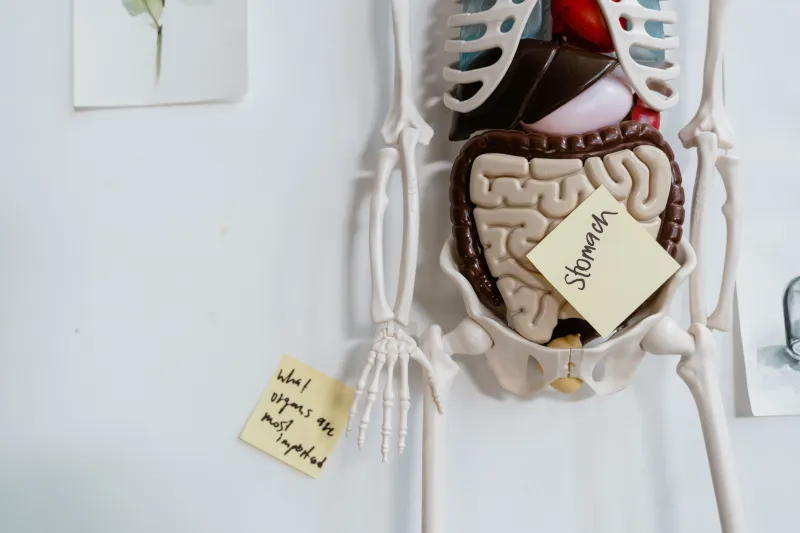
The stomach is far more than a holding chamber. Its primary role in drug absorption involves the dissolution of solid dosage forms and the initial chemical environment to which a drug is exposed. Gastric pH — the measure of acidity in the stomach — profoundly influences how quickly a tablet or capsule breaks apart and how stable the active compound remains during that process.
Under fasting conditions, the average adult stomach maintains a pH between 1.5 and 3.5, an environment hostile enough to degrade certain medications before they can be absorbed. Proton pump inhibitors, which millions of Americans take daily for acid reflux, deliberately raise gastric pH — a therapeutic benefit for the esophagus that can simultaneously reduce the absorption of drugs like ketoconazole, itraconazole, and certain HIV antiretrovirals that require an acidic environment to dissolve properly.
Conversely, enteric-coated tablets are engineered to resist dissolution in the stomach and release their contents only when they reach the more alkaline environment of the small intestine. Crushing or splitting these formulations — a common workaround for patients who struggle to swallow large pills — can expose the drug to premature gastric degradation and dramatically reduce its effectiveness.
Intestinal Transit: Timing Is Everything
Once a drug clears the stomach, it enters the small intestine, where the vast majority of oral drug absorption occurs. The surface area of the small intestine — estimated to be roughly the size of a tennis court when fully unfolded — is lined with specialized transport proteins and passive diffusion channels that pull drug molecules into the intestinal wall and, ultimately, into the portal circulation.
How long a drug spends in this absorption zone depends on intestinal motility, the coordinated muscular contractions that propel contents toward the colon. Conditions or medications that accelerate motility — including certain laxatives, high-fiber meals, and some diabetes medications — can shuttle drugs through the small intestine faster than absorption mechanisms can act, reducing the amount captured. Conversely, conditions that slow motility, such as diabetic gastroparesis or the use of opioid pain medications, may extend contact time and increase absorption of some compounds while causing others to degrade.
This is one reason why clinical instructions for certain medications specify a precise timing relationship to meals. It is not simply about comfort or tolerability; it is about controlling the rate at which stomach contents empty into the small intestine, thereby regulating the window of maximum absorptive opportunity.
Nutrient Competition and the Transporter Problem
The intestinal wall does not absorb drugs in isolation. It simultaneously processes dietary nutrients — amino acids, fatty acids, minerals, and vitamins — using many of the same transporter proteins that drugs rely upon. When a medication and a nutrient compete for the same transporter, the result can be clinically significant reductions in drug absorption.
Levothyroxine, the synthetic thyroid hormone taken by tens of millions of Americans, offers a well-documented example. Calcium-rich foods, iron supplements, and even high-fiber cereals consumed within hours of a levothyroxine dose can bind to the drug in the gastrointestinal tract or compete for its absorptive pathway, reducing circulating thyroid hormone levels enough to leave patients inadequately treated despite consistent adherence to their prescription.
Similarly, fluoroquinolone antibiotics like ciprofloxacin form insoluble complexes with divalent cations — calcium, magnesium, iron, zinc — rendering a substantial portion of the dose biologically unavailable if taken alongside dairy products, antacids, or mineral supplements. The interaction is not subtle; studies have demonstrated reductions in ciprofloxacin bioavailability exceeding 50 percent under such conditions.
The First-Pass Effect: A Hidden Tax on Every Oral Dose
Drugs absorbed through the intestinal wall do not travel directly to their target tissues. They first pass through the portal vein into the liver, where metabolic enzymes — particularly the cytochrome P450 family — begin breaking down the compound before it ever reaches systemic circulation. This hepatic processing, known as first-pass metabolism, can eliminate a substantial fraction of an oral dose.
Nitrates used for chest pain, certain beta-blockers, and many opioid analgesics undergo extensive first-pass metabolism, which is why oral and intravenous doses of the same drug can differ by factors of ten or more. Pharmaceutical manufacturers account for this effect when establishing labeled doses, but individual variation in liver enzyme activity — influenced by genetics, age, concurrent medications, and liver health — means that first-pass metabolism is not uniform across patients.
Practical Guidance for Optimizing Absorption
For patients, translating this pharmacological complexity into actionable behavior begins with a few core principles.
Read beyond 'take with or without food.' This instruction is a starting point, not a complete picture. Ask your pharmacist or prescribing clinician whether specific foods, beverages, or supplements have documented interactions with your medication — and whether the timing of those interactions matters.
Maintain consistent dosing conditions. If you take a medication with food, take it with food every day. If you take it fasting, maintain that pattern. Alternating conditions introduces variability in absorption that can destabilize therapeutic drug levels.
Never alter tablet formulations without guidance. Crushing, splitting, or chewing extended-release or enteric-coated tablets can fundamentally change how and where a drug is absorbed. Always verify with a pharmacist before modifying a dosage form.
Report gastrointestinal symptoms to your provider. Chronic diarrhea, constipation, nausea, or conditions affecting stomach emptying can all alter drug absorption in ways that may require dose adjustments or formulation changes.
Account for supplement timing. Mineral supplements, fiber products, and certain herbal preparations can interfere with medication absorption even when they are not prescription drugs. Separating their administration by two to four hours often mitigates the interaction, but specific guidance should come from your healthcare team.
The Bigger Picture
The pharmaceutical label on your prescription bottle is calibrated for a theoretical average patient under controlled conditions. Your body, your diet, your concurrent medications, and your gastrointestinal health collectively determine how closely your actual experience matches that calibration. Recognizing the biological complexity between ingestion and effect is not cause for alarm — it is an invitation to engage more deliberately with your care team, ask more specific questions, and treat medication adherence as something more nuanced than simply remembering to take a pill each morning.