Past the Date on the Label: What Expiration Stamps Actually Tell You About Your Medications
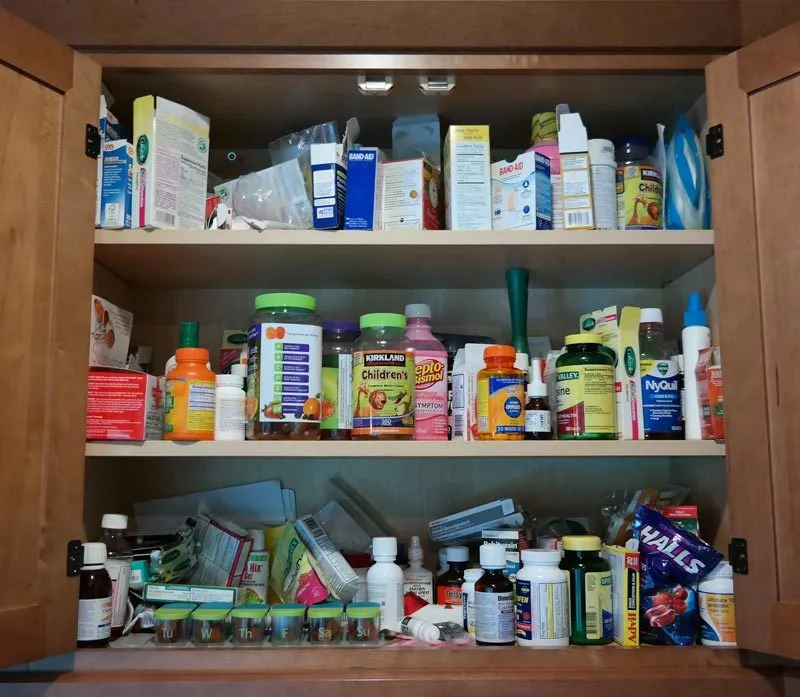
Photo: expired prescription medication bottles medicine cabinet organizing, via akronohiomoms.s3-accelerate.amazonaws.com
Every year, millions of Americans discard perfectly functional medications based on a date printed on a label—a date that, in many cases, reflects legal and commercial considerations as much as it does genuine safety concerns. The instinct to toss an expired prescription is understandable, even responsible-sounding. But the underlying science tells a more complicated story, one that patients and providers alike deserve to understand clearly.
What an Expiration Date Actually Represents
When a pharmaceutical manufacturer prints an expiration date on a drug package, they are not declaring that the medication transforms into something toxic the moment the calendar turns. Rather, that date marks the end of the period during which the company can legally guarantee that the drug retains at least 90 percent of its labeled potency under specified storage conditions.
The U.S. Food and Drug Administration requires manufacturers to conduct stability testing on their products, but those tests are typically conducted only through the expected shelf life the company intends to market—often 12 to 36 months. Once testing stops, the official guarantee stops. The drug itself, however, does not necessarily change on cue.
This distinction is not semantic. It has profound implications for how patients interpret the numbers on their bottles.
The SLEP Study: A Military Experiment With Civilian Lessons
Perhaps the most compelling evidence that expiration dates are conservative estimates comes from a large-scale government initiative that most patients have never heard of. Beginning in the 1980s, the U.S. Department of Defense partnered with the FDA on the Shelf Life Extension Program, or SLEP, which was designed to assess whether stockpiled military medications could remain viable beyond their labeled dates.
The results were striking. Researchers tested more than 100 drug products—including tablets, capsules, and some liquids—and found that the vast majority retained adequate potency well past their expiration dates. Some remained stable for 15 years or longer. The program ultimately saved the federal government hundreds of millions of dollars in unnecessary drug replacement costs.
While the SLEP data applies specifically to medications stored under controlled, ideal conditions, it nonetheless challenges the assumption that expiration dates represent a hard biological boundary.
Drugs That Degrade Meaningfully—and Those That Do Not
Not all medications age the same way. The chemical composition of a drug, its formulation, and its storage environment all influence how it holds up over time. Patients benefit from understanding which categories warrant more caution.
Medications with well-documented stability concerns include:
- Liquid formulations, particularly oral suspensions and eye drops, which are more susceptible to microbial contamination and chemical breakdown than solid dosage forms.
- Nitroglycerin tablets, which are notoriously volatile and can lose potency rapidly, especially when exposed to light, heat, or moisture.
- Insulin and biologics, which are protein-based compounds sensitive to temperature fluctuations and generally should not be used past their expiration dates.
- Tetracycline antibiotics, which have historically been associated with a degradation product linked to kidney toxicity—though modern formulations have largely addressed this concern, the legacy caution remains relevant.
- EpiPens and similar epinephrine auto-injectors, which are critical for anaphylaxis response and whose potency decline could have life-threatening consequences.
Medications that tend to remain stable beyond their labeled dates under proper storage conditions include many solid oral drugs such as certain antihistamines, analgesics like aspirin and acetaminophen, and some antihypertensives. Research has suggested that drugs in this category often retain the overwhelming majority of their potency for years after expiration.
The key variable, in nearly every case, is storage. Heat, humidity, and light are the primary enemies of pharmaceutical stability. A bottle of ibuprofen kept in a cool, dry drawer will behave very differently from one stored in a steamy bathroom cabinet—a location, incidentally, where most Americans keep their medicine.
The Regulatory Framework and Its Limitations
The FDA's current expiration dating system is designed to protect patients, and that protective intent is legitimate. However, the system was built with practical constraints in mind. Manufacturers are not incentivized to fund long-term stability studies beyond what is commercially necessary, and the regulatory framework does not require them to do so.
The result is a standardized policy that, while safe in its conservatism, does not reflect the full range of what science knows about individual drug stability. A one-size-fits-all expiration framework applied to a pharmacopeia of chemically diverse compounds will inevitably be accurate for some drugs and overly cautious for others.
This is not a criticism of the FDA's mission—it is an acknowledgment that regulatory systems are built for populations, not individual patients, and that informed patients are better equipped to make nuanced decisions.
What This Means for Patients in Practice
None of the above is an endorsement for casually ignoring expiration dates across the board. Rather, the evidence suggests a tiered approach based on the type of medication, the stakes involved, and storage history.
When in doubt, discard: For any medication used in emergency or critical situations—epinephrine, nitroglycerin, seizure medications, insulin—the risk of reduced potency is never worth the marginal savings. Replace these on schedule.
Assess storage history: A medication kept in a cool, dark, dry environment is far more likely to remain stable than one that has cycled through temperature extremes. If you cannot account for how a drug has been stored, treat the expiration date as meaningful.
Consult your pharmacist: Pharmacists are among the most accessible and underutilized health resources in the United States. If you are uncertain about a specific medication's stability, a brief conversation with a licensed pharmacist can provide personalized guidance that a label simply cannot.
Consider the drug class: Liquid preparations, biologics, and chemically reactive compounds deserve more deference to their expiration dates than many solid oral medications. Context matters.
Do not self-substitute expired medications for active prescriptions: Using an old supply of a drug instead of filling a current prescription introduces variables—potency uncertainty, drug interactions, dosing confusion—that no patient should manage without clinical oversight.
The Broader Public Health Angle
There is also a resource and environmental dimension worth noting. Americans discard an estimated 200 million pounds of medications annually, and while proper disposal of controlled substances and genuinely expired drugs is important, the indiscriminate disposal of stable medications contributes to pharmaceutical waste that eventually enters water systems and landfills.
A more nuanced understanding of expiration science does not just serve individual patients—it has the potential to reduce waste and improve access in under-resourced communities where medication costs are a genuine barrier to adherence.
A More Informed Approach to the Medicine Cabinet
The expiration date on your prescription bottle is a useful piece of information, but it is not the final word on whether a medication remains viable. It is a manufacturer's guarantee, calibrated to commercial timelines and regulatory minimums, not a precise biological cliff edge.
For patients, the takeaway is not to ignore these dates—it is to understand what they do and do not communicate. Paired with knowledge of drug type, storage conditions, and clinical stakes, expiration information becomes one component of a more complete picture rather than an automatic trigger for disposal.
As with most aspects of medication management, the most protective tool available to patients is accurate information. The goal at ClevitraDB Health is always to ensure that information is accessible, evidence-based, and genuinely useful—not just easy to print on a label.