Fragmented Pharmacy Records: The Silent Threat to Your Medication Safety

Photo by Photo by Navy Medicine on Unsplash on Unsplash
For most Americans, choosing a pharmacy feels like a low-stakes decision—perhaps driven by proximity to work, a preferred drive-through lane, or a change in insurance coverage. What rarely enters the calculation is the possibility that switching dispensing locations could quietly compromise your health. Yet for millions of patients managing multiple prescriptions, that is precisely what happens when medication records fail to transfer alongside them.
The United States pharmacy landscape is deeply decentralized. Unlike a primary care physician's office or a hospital system with integrated electronic health records, community pharmacies—whether independent operations or national chains—maintain separate, siloed databases. When a patient transitions from one pharmacy to another, those records do not automatically migrate. The result is a discontinuity of care that can have consequences far more serious than an inconvenient delay at the pickup counter.
The Critical Function Pharmacists Perform Behind the Counter
The role of a dispensing pharmacist extends well beyond counting pills and affixing labels. Every time a new prescription is entered into a pharmacy's system, trained staff are expected to perform a drug utilization review—a structured check that screens for potential interactions with other medications on file, duplicate therapies, inappropriate dosages relative to age or renal function, and contraindications based on known allergies.
This review is only as effective as the data it draws upon. If a patient has spent the last three years filling prescriptions at a pharmacy in their previous city—and now presents at an entirely new location with a single new prescription in hand—that screening process operates with a fraction of the relevant information. Medications the patient has taken for years, including over-the-counter drugs that were logged at the former location, simply do not exist in the new system. The pharmacist, through no fault of their own, is working blind.
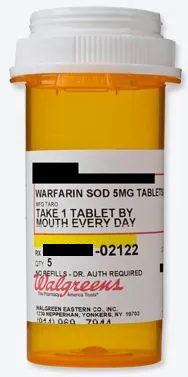
Consider a patient who has been taking a blood thinner such as warfarin at one pharmacy and then, following a move across state lines, begins filling a new antibiotic prescription at a different chain. If that antibiotic is one of many known to potentiate warfarin's effects—raising the risk of dangerous bleeding—the interaction check at the new pharmacy may fail entirely. The old prescription is invisible to the new database.
Insurance Changes and the Involuntary Switch
Not all pharmacy transitions are voluntary. Each year, millions of Americans experience changes to their employer-sponsored health insurance, enroll in new Medicare Part D plans, or qualify for Medicaid under shifting state criteria. Many of these coverage changes come with preferred pharmacy networks that effectively steer patients toward specific dispensing locations. The choice may be financial rather than medical: use the preferred pharmacy or pay substantially more out of pocket.
These involuntary switches are among the most dangerous, precisely because patients are often navigating them during periods of broader life disruption—job changes, retirement, or financial strain. The administrative burden of coordinating a medical history transfer rarely feels urgent when other concerns dominate, and the downstream risks remain largely invisible until a problem surfaces.
Research published in peer-reviewed pharmacy and health services journals has consistently identified multi-pharmacy use as an independent risk factor for adverse drug events. Patients who fill prescriptions at two or more locations in a given year are significantly more likely to experience undetected drug interactions than those who maintain a single dispensing relationship. Older adults, who tend to carry the heaviest medication burdens and who are disproportionately affected by insurance-driven pharmacy changes, face the greatest exposure.
Adherence Gaps That Accumulate Without Notice
Beyond interaction screening, there is a subtler but equally significant consequence of fragmented pharmacy records: the erosion of adherence monitoring. Many modern pharmacy systems flag patients who fail to refill maintenance medications on schedule—an important safety net for conditions such as hypertension, diabetes, and heart failure, where lapses in therapy can precipitate acute events.
When a patient's refill history is spread across multiple locations, no single pharmacy possesses the longitudinal view necessary to recognize a pattern of non-adherence. A patient who consistently refills a statin two weeks late, for instance, might trigger a pharmacist intervention at a pharmacy that has observed the pattern over two years. That same patient, arriving at a new location, starts with a clean slate. The opportunity for early intervention disappears.
Prescribers face a parallel challenge. Physicians who rely on pharmacy benefit management data to track patient adherence—particularly those participating in value-based care arrangements—may receive incomplete or misleading information when their patients use multiple dispensing sources. Clinical decisions made on the basis of that data carry an inherent margin of error that is rarely acknowledged in the examination room.
Practical Strategies for Maintaining Continuity
The structural fragmentation of the American pharmacy system is not a problem any individual patient can resolve unilaterally. However, there are concrete steps that meaningfully reduce the associated risks.
Maintain a personal medication list. A comprehensive, up-to-date written or digital record of every prescription medication, over-the-counter drug, vitamin, and supplement you take—including doses and prescribing physicians—is among the most powerful safety tools available. Present this list proactively whenever you fill a prescription at a new location.
Request a complete medication history transfer. When switching pharmacies, formally request that your previous pharmacy transmit your full dispensing history to the new location. Many pharmacies will accommodate this request, though the process is not always seamless and may require follow-up.
Designate a single primary pharmacy when possible. Even patients with complex, multi-specialty medication regimens benefit from centralizing their dispensing at one location. When specialty medications require a different pharmacy, inform both locations and request that records be cross-referenced.
Inform your prescriber of any pharmacy change. Your physician's office can serve as an additional coordination point, flagging known interactions or adherence concerns when a transition occurs.
Ask about medication synchronization programs. Many pharmacies offer programs that consolidate refill dates, reducing the likelihood of missed doses during transitions and making it easier to maintain a single dispensing relationship.
Consider pharmacies with cross-chain record access. Some large national chains maintain shared databases across locations, which can partially mitigate the risks associated with geographic transitions within the same network.
A System-Level Problem Requiring System-Level Awareness
Ultimately, the hazards associated with pharmacy switching reflect broader gaps in health information exchange infrastructure across the United States. While interoperability standards have improved significantly within hospital systems and between electronic health record platforms, community pharmacy data remains largely outside these integrated frameworks. Federal and state-level initiatives to expand prescription drug monitoring programs and promote real-time data sharing represent meaningful progress, but implementation is uneven and incomplete.
For patients and providers navigating the current landscape, awareness is the first line of defense. Understanding that a pharmacy change is not merely an administrative event—but a potential disruption to a carefully maintained safety net—changes how these transitions are managed. Treating the handoff between dispensing locations with the same deliberateness applied to transferring care between physicians is not an overreaction. It is an appropriate response to a genuine and underappreciated risk.
At ClevitraDB Health, our commitment is to ensure that patients and healthcare professionals have access to the information needed to make safer, more informed decisions at every stage of medication management. Pharmacy continuity is not a convenience issue. It is a patient safety issue—and it deserves to be treated as one.