What Patients Leave Out: Cannabis, CBD, and the Prescriptions They Interact With
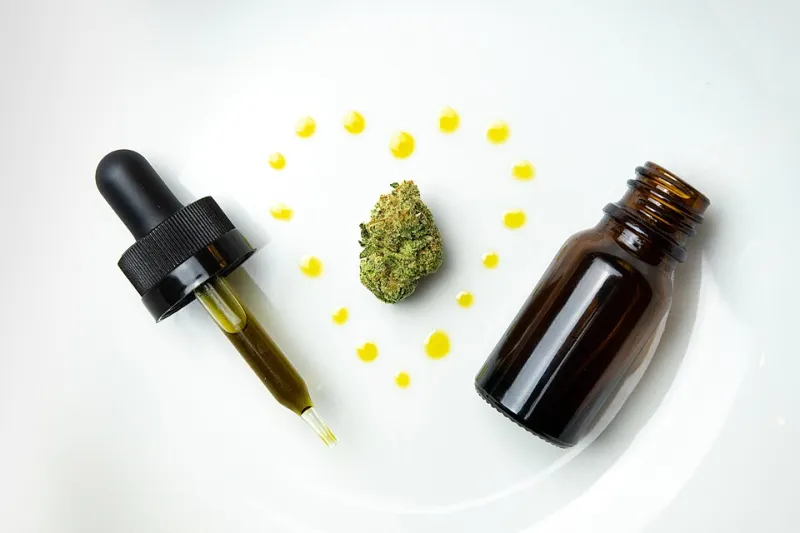
Photo: Sherpa SEO, CC BY 3.0, via Wikimedia Commons
Cannabis is legal for medical use in most states and for adult use in roughly half of them, and CBD products are sold in grocery stores, gas stations, and online retailers nationwide. Meanwhile, tens of millions of Americans take prescription medications daily. The overlap between those two facts is large, routinely undisclosed, and clinically relevant.
The problem is not that cannabis is uniquely dangerous. It is that a substance capable of changing how the liver processes other drugs is being used alongside those drugs without anyone — prescriber or patient — acknowledging it.
Why the Conversation Stalls
Patients offer several reasons for silence, and most are reasonable. Some worry about judgment or about a note appearing in a permanent medical record. Some live in states where the legal status remains ambiguous and fear consequences beyond the clinic. Many assume that a product described as natural or plant-based could not interfere with a prescription. And a substantial number have simply never been asked.
Clinicians contribute to the gap as well. Time pressure, uncertainty about state law, and the absence of clear dosing guidance all make the topic easy to defer. Screening questions for cannabis use are not uniformly embedded in intake forms the way questions about alcohol and tobacco often are.
What Is Known: One Enzyme System, Many Drugs
The liver's cytochrome P450 family of enzymes processes a large share of prescription medications. Cannabinoids interact with that system in both directions: they are metabolized by these enzymes, and they can inhibit or induce them.
Cannabidiol, or CBD, is the better documented of the two principal cannabinoids. Laboratory and human studies indicate that CBD inhibits CYP3A4 and CYP2C19, among others, at clinically meaningful levels. The comparison clinicians most often reach for is grapefruit juice, which produces a similar inhibition of CYP3A4 and carries explicit warnings on the labels of affected drugs. When that enzyme is slowed, concentrations of drugs it normally clears can rise, sometimes substantially. THC has its own interactions, though the evidence base is thinner.
Where the Evidence Is Strongest
- Warfarin. Case reports describe elevated INR values in patients taking warfarin who began using CBD products. Given warfarin's narrow therapeutic window, this is among the most consequential interactions discussed in the literature.
- Sedatives and opioids. The concern here is pharmacodynamic rather than metabolic: additive central nervous system depression when cannabinoids are combined with benzodiazepines, opioid analgesics, sleep medications, or alcohol. The combination of cannabis with opioids is associated with increased risk of respiratory depression, particularly at higher doses.
- Antiseizure medications. The FDA-approved CBD product carries labeled interactions with clobazam, whose active metabolite accumulates when the two are combined, and with valproate, where liver enzyme elevations have been reported.
- Cardiovascular drugs. Calcium channel blockers and statins are both CYP3A4 substrates, making them plausible candidates for interaction with CBD. Cannabinoids also affect heart rate and blood pressure directly, which matters for patients on antihypertensives.
- Immunosuppressants. Tacrolimus, everolimus, and similar agents have narrow therapeutic ranges and depend on CYP3A4, making them a category where caution is warranted even on theoretical grounds.
What Remains Genuinely Uncertain
Honesty requires acknowledging that much of this evidence comes from case reports, small pharmacokinetic studies, and extrapolation from known enzyme behavior rather than from large randomized trials. The variables are substantial: dose, route of administration, the ratio of CBD to THC, frequency of use, and the timing of use relative to a prescription.
Route deserves particular attention. Inhaled cannabis produces different exposure patterns than ingested oil, and topical products appear to produce minimal systemic absorption. Product variability is another factor: independent testing of commercially available CBD products has repeatedly found labeled content that did not match measured content, and in some cases detected THC where none was disclosed.
Uncertainty is not the same as safety, and it is not the same as prohibition. It is a reason for disclosure and for individualized assessment rather than blanket rules.
How Clinicians Can Ask Without Judgment
The framing matters more than the wording. A question embedded in a broader substance-use review — asked alongside alcohol, tobacco, and over-the-counter supplements, and phrased as routine — tends to produce accurate answers. Specificity helps: patients who do not consider themselves cannabis users may still use a CBD tincture for sleep or a topical for joint pain, and questions that mention only smoking will miss them.
Asking about the product rather than the person also lowers the stakes. "Are you using anything for sleep or pain that I should know about, including cannabis or CBD products?" invites information. A question that begins with a warning usually invites a denial.
How Patients Can Prepare
- Bring the product label, or a photograph of it, including the concentration per serving.
- Be ready to describe the route — inhaled, ingested, topical — and how often it is used.
- Mention CBD separately from cannabis, since the two carry different interaction profiles.
- Ask specifically whether any drug on the current list is affected by CYP3A4 or CYP2C19; the answer identifies many of the drugs of concern.
- Ask about timing as well as quantity. No clinician can offer a universal safe interval, but the discussion is more productive with real numbers.
- Do not stop a prescribed medication abruptly in order to use cannabis or CBD. Seizure medications, anticoagulants, and cardiac drugs in particular should never be discontinued without direction.
The Conversation Is the Intervention
There is no single rule that fits every patient, and no clinician can promise that a particular combination is safe. What can be promised is that the assessment improves when the facts are complete. The most useful thing a patient can bring to an appointment is not a decision about cannabis — it is an accurate account of what is actually being taken, alongside the medications that were prescribed.